01 Creature encounter
I met a Himmapan creature
Start with the form you saw, then discover the stories, objects, and ceremonies that gave it meaning.
Begin with: Use the creature finder
Explore this themeForests · waters · creatures · art
A sacred forest and mountain world imagined across Buddhist Asia—home to luminous lakes, impossible rivers, extraordinary animals, sages, spirits, and stories that have changed for nearly two thousand years.
Explore the world through old stories, manuscripts, maps, monuments, and art.
Choose a way in
Four popular questions
Perhaps you saw a creature at a temple, heard of a Himalayan lake, or wondered whether an old painting was meant as a map.
The great discovery
A remote mountain forest, powerful waters, marvelous beings, and journeys beyond ordinary human life form the enduring thread. Around that thread, directions, dimensions, animals, river routes, and local names keep changing. That movement is the story of Himavanta.
Follow the story through timeOne lake, three visions
| Tradition | East | South | West | North |
|---|---|---|---|---|
| Sui Chinese | Elephant | Bull | Horse | Lion |
| Neak Pean | Human | Lion | Horse | Elephant |
| Berlin II 650 | Lion | Bull | Horse | Elephant |
Reading paths
Meet a creature, follow the sacred lake, live in the forest, learn from its stories, or see Himavanta take shape in art.
01 Creature encounter
Start with the form you saw, then discover the stories, objects, and ceremonies that gave it meaning.
Begin with: Use the creature finder
Explore this theme02 Sacred water
Trace Anavatapta / Anotatta as its rivers, animals, mountains, and meanings change across Asia.
Begin with: Begin at Anavatapta
Explore this theme03 Location question
Explore the landscapes, Himalayan associations, and real monuments behind the sacred geography.
Begin with: Enter the forest
Explore this theme04 Visual history
Look through maps, architecture, manuscript painting, and sculpture from different places and centuries.
Begin with: Open the visual collection
Explore this theme05 Everyday Himavanta
Discover how beings find shelter, food, fragrance, community, and seasonal rhythms in an extraordinary forest.
Begin with: Meet the communities
Explore this theme06 Ideas made visible
Follow memory, karma, restraint, compassionate care, purification, and impermanence through vivid mountain scenes.
Begin with: Begin with six lessons
Explore this themeContinue reading
Your saved and recently opened guides stay on this device.
Saved reading
Return when you are ready
Save any guide and it will be waiting on this device when you return.
Open saved readingGood places to begin
These guides unfold the largest ideas in plain language, with beautiful details and room to wander.
Start here
Meet Himavanta as a vast mountain-and-water world of lakes, rivers, forests, sages, spirits, and extraordinary creatures.
Lake & rivers
Visit the cool, clear lake whose rivers, animals, mountains, and meanings changed across Buddhist Asia.
Lake & rivers
See elephants, bulls, horses, lions, and human forms move around the four sides of the sacred lake.
Art & manuscripts
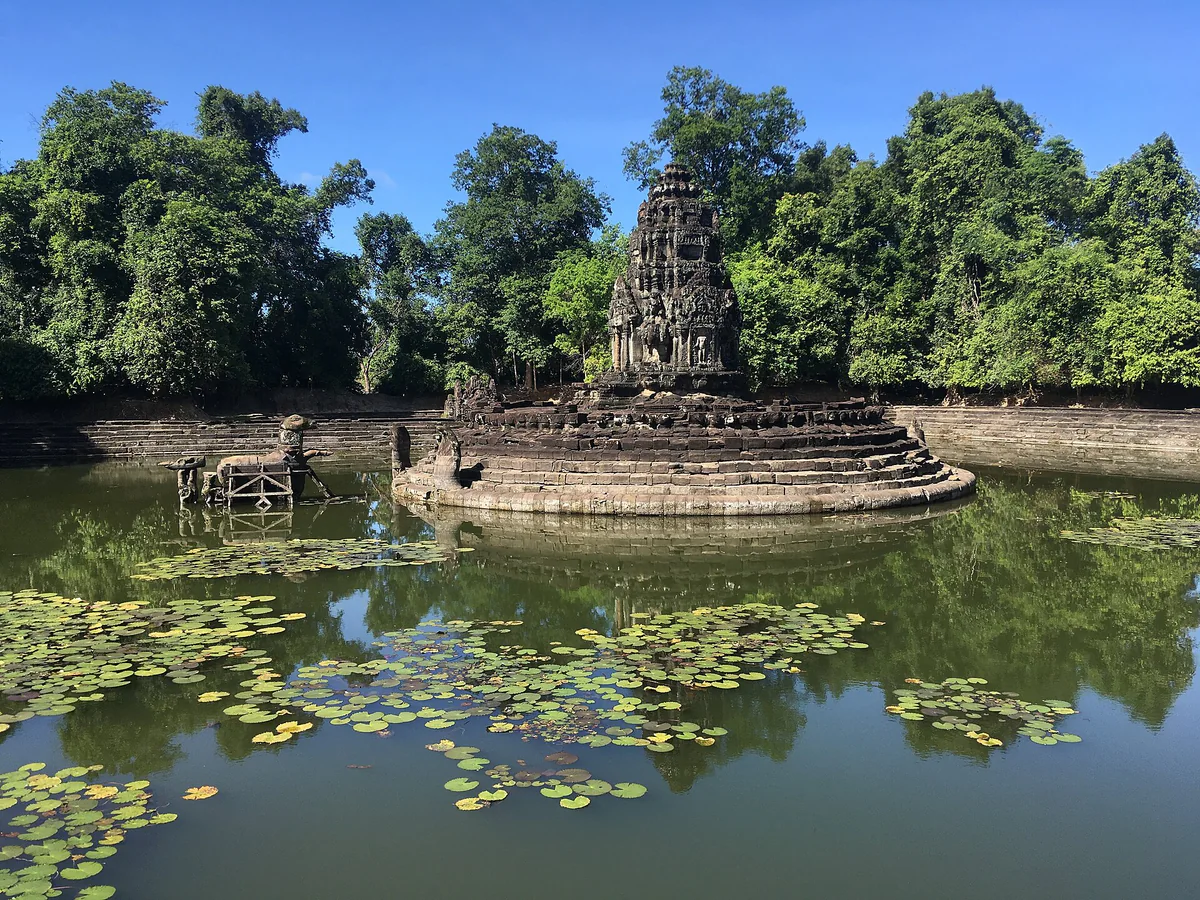
Visit the twelfth-century island, basins, chapels, channels, and healing waters of Neak Pean.
Art & manuscripts
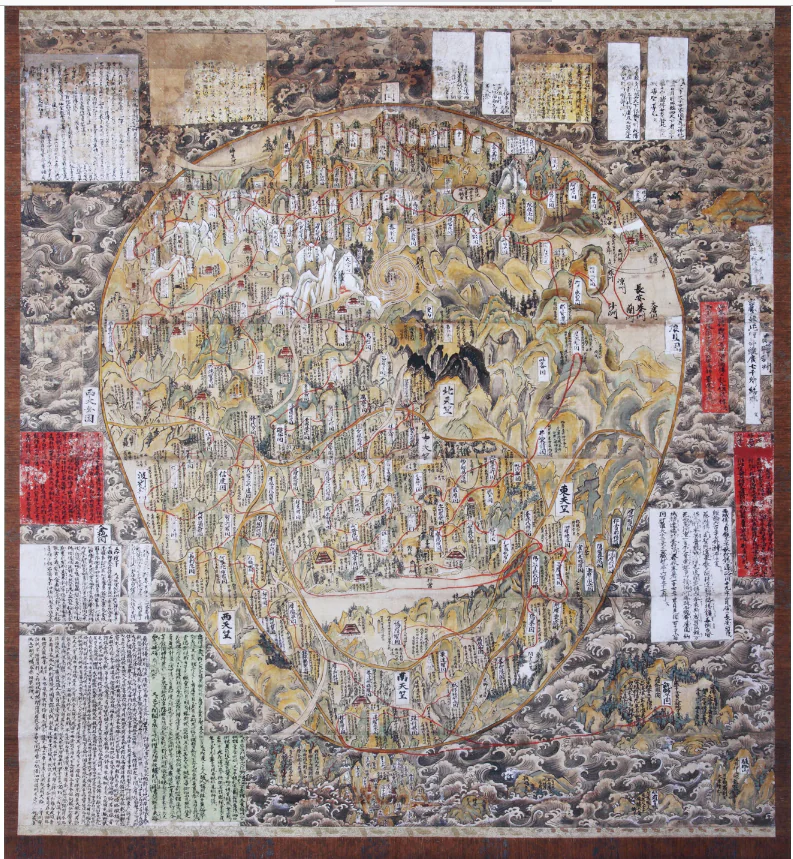
Compare maps from 1364, 1710, and 1828 as sacred geography meets new centuries and new ways of seeing the world.
Across Asia
Explore seven lakes, elephant kingdoms, rivers, hermitages, golden birds, and many distinct forest landscapes.
New stories and revisions
New discoveries and improved guides appear in the site’s open RSS feed.
Creature guide
From nāgas and garuḍas to golden haṃsas, lion people, water elephants, and six-tusked Chaddanta, every creature opens another part of the world.
Meet all 22 published creaturesHimavanta in art
Look closely at maps, architecture, painting, and sculpture from different places and centuries.